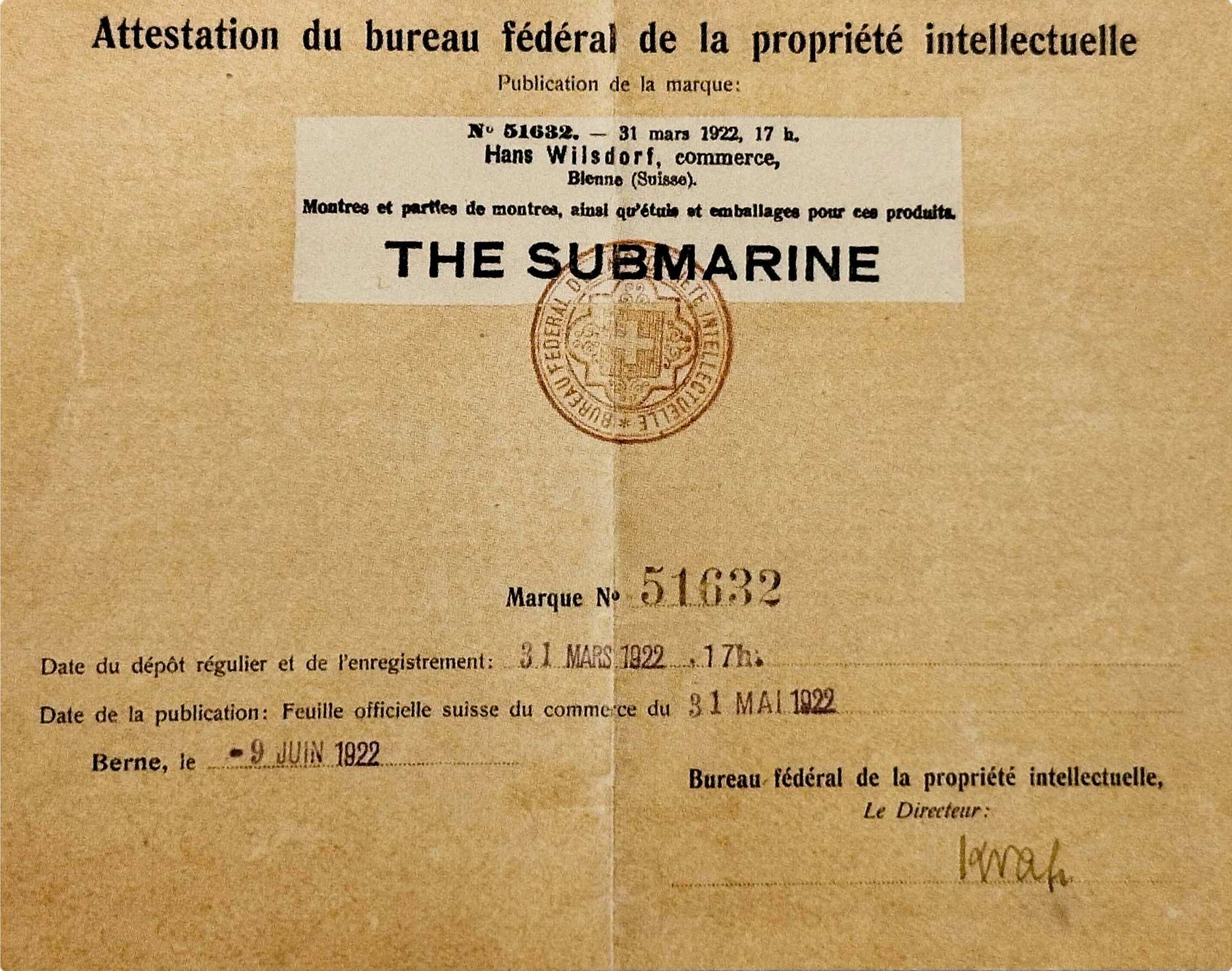
The case and movement assembly was attached inside a second, outer case, to which a strap was fitted and whose bezel and crystal were screwed down to ensure watertightness. This meant that accessing the crown – to wind the watch or set the time – required opening the outer case.
Although the Submarine proved impractical, it nonetheless marked the first step in Hans Wilsdorf’s efforts to create a completely sealed watch case that was convenient to use. This hermetically sealed case was introduced in 1926. It featured an ingenious system of screw-down bezel, case back and winding crown.
Thanks to the Oyster, the Rolex founder explained, it was no longer necessary to remove the watch to wash one’s hands or bathe, or while at work in a dusty workshop or when perspiring profusely. This revolutionary timepiece was put to the test in 1927, when British swimmer Mercedes Gleitze spent more than 10 hours in the bitterly cold waters between France and England during her cross-Channel swim. She was wearing a gold Oyster watch, which emerged entirely unscathed.
“You just keep your Oyster on your wrist whatever happens and it will never fail you.” The time-honoured promise by Hans Wilsdorf led to the Oyster’s being chosen and relied on by numerous pioneers – from climbers of the highest peaks to explorers of the deepest reaches of the oceans.